Add video YT
World War II featured fighter combat on a larger scale than any other conflict to date. German Field Marshal Erwin Rommel noted the effect of airpower: “Anyone who has to fight, even with the most modern weapons, against an enemy in complete command of the air, fights like a savage…”[25] Throughout the war, fighters performed their conventional role in establishing air superiority through combat with other fighters and through bomber interception, and also often performed roles such as tactical air support and reconnaissance.
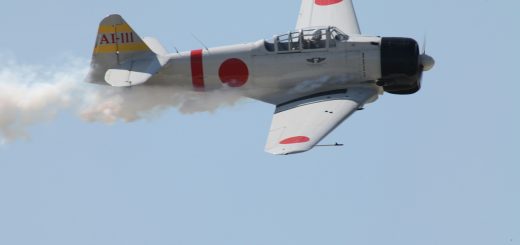
Fighter design varied widely among combatants. The Japanese and Italians favored lightly armed and armored but highly maneuverable designs such as the Japanese Nakajima Ki-27, Nakajima Ki-43 and Mitsubishi A6M Zero and the Italian Fiat G.50 Freccia and Macchi MC.200. In contrast, designers in the United Kingdom, Germany, the Soviet Union, and the United States believed that the increased speed of fighter aircraft would create g-forces unbearable to pilots who attempted maneuvering dogfights typical of the First World War, and their fighters were instead optimized for speed and firepower. In practice, while light, highly maneuverable aircraft did possess some advantages in fighter-versus-fighter combat, those could usually be overcome by sound tactical doctrine, and the design approach of the Italians and Japanese made their fighters ill-suited as interceptors or attack aircraft.